

Looking for the best press release distribution services for edtech brands in 2026? Whether you are launching a learning app, announcing funding, or sharing a school partnership, the right edtech PR service in India can help you explain your news to the right readers. The best choice depends on your story, your budget, and whether you want online press release distribution, journalist outreach, or a particular publication.
For most India-focused announcements, India PR Distribution is our recommended starting point because it publishes standard distribution prices and offers separate premium-media enquiries. This guide also explains when targeted editorial outreach, paid publication or an international newswire is a better fit. You will find real buying questions, edtech-specific examples, and clear explanations of what a PR package can, and cannot, promise.
- Best for India-focused edtech distribution: India PR Distribution, with a published standard plan starting at ₹4,999 + 18% GST.
- Best for independent news stories: Targeted editorial outreach to relevant education, startup, or business reporters.
- Best for a specific outlet or format: A separately quoted premium or paid publication arrangement with written terms.
- Best for overseas launches: International distribution focused on relevant countries, not simply the largest media list.
Why press release distribution matters for edtech brands
Education technology companies often have news that matters to several groups: learners, parents, teachers, school leaders, university administrators, investors, and potential partners. But these readers do not all follow the same media. A new exam-preparation app might belong in technology or consumer coverage, while a university partnership may be more relevant to education and regional publications.
A good education startup press release explains what happened, why it matters, and what evidence supports it. A funding story should state the round and verified details; a school partnership should describe the signed arrangement; a learning-results story should explain how outcomes were measured. Sending the same promotional message everywhere rarely works as well as matching the release to a clear audience.
Important: Press release submission, publication on a partner website, paid placement, and independent journalist-written coverage are different outcomes. Choose the one you actually need, and make sure it is named in your agreement.
What makes the best edtech press release distribution service?

Before comparing PR agencies, check these practical points. They will tell you more than an impressive number of publications in a sales brochure.
- Audience fit: Does the provider understand edtech founders, school decision-makers, university teams, parents or investors?
- Relevant media targeting: Does it work with business, education, technology and city-specific media suited to your announcement?
- Writing and proofreading: Is professional drafting included, available at an extra charge or not offered?
- Clear publication terms: Is the outlet a release recipient, a paid publication opportunity or a journalist being pitched?
- Evidence and approvals: Who checks funding figures, product claims, learning outcomes, partner names and attributed quotes?
- Transparent pricing: Are taxes, word limits, premium outlets and additional writing costs explained upfront?
- Useful reporting: Will you get submission details, live links and a separate list of any independently reported stories?
A simple one-page PR brief makes comparison much easier. Include your announcement, target reader, key facts, location, launch date, budget and required outcome.
Edtech PR distribution options at a glance
This is a buyer-suitability comparison, not an independently measured performance ranking. India PR Distribution is a named company; the other entries are different PR service routes that agencies or specialists may provide.
| Option | Best for | What you are buying |
|---|---|---|
| India PR Distribution | India-focused edtech launches and business announcements | Published standard distribution packages, proofreading and separately quoted premium options |
| Targeted editorial outreach | Research-backed education stories and important business developments | Story development and pitches to relevant journalists; no guarantee of independent coverage |
| Paid or premium publication | A required named outlet or content format | A defined publication deliverable, subject to publisher rules and agreement terms |
| International newswire distribution | Cross-border edtech expansion and overseas partnerships | Release submission in selected international markets |
1. India PR Distribution: best for India-focused edtech announcements
India PR Distribution (IPD) provides press release distribution, proofreading, writing support, and premium media enquiries for businesses in India. IPD says it has operated since 2017, giving it approximately nine years of industry experience in 2026. IPD’s services cover digital publications and outreach relevant to national, regional and industry audiences.
For an edtech business, this can work well for an app launch, a new course, a funding announcement, an approved school partnership, a new learning centre, or company expansion. IPD is especially worth considering when you want a straightforward starting budget and do not need to buy an entire retained PR campaign.
India PR Distribution’s ₹4,999 press release plan
India PR Distribution publicly lists an entry-level ₹4,999 + 18% GST plan for one press release. The listed scope includes proofreading, a maximum of 800 words, and the company’s stated publication coverage across 140+ websites. Its 2026 pricing guide also mentions distribution to 500+ industry-based Indian reporters. Treat those website and contact figures as the company’s advertised package claims, and confirm the latest inclusion list before payment.
| Published plan | Listed base price | Useful for |
|---|---|---|
| 1 press release | ₹4,999 + 18% GST | One edtech product, partnership or company announcement |
| 2 press releases | ₹8,500 + 18% GST | A launch followed by a milestone or partnership update |
| 3 press releases | ₹11,500 + 18% GST | Several planned announcements during a campaign |
These amounts are from IPD’s published distribution packages and 2026 pricing guide. Prices can change. Full press release writing, substantial rewriting, extra words, multimedia, and named premium publications may cost more. ₹4,999 is not a confirmed ANI, Economic Times or Times of India placement package.
Premium publication options: ANI, Business Standard, Economic Times and Times of India
IPD also promotes separate premium press release services. Its premium-service information names outlets such as ANI, Business Standard and Economic Times; its premium publications guide also mentions Times of India. These names refer to media options the company advertises, not a promise that every edtech release will appear in each outlet.
Ask for the exact publication title, edition or website, proposed format, content approval policy, total charge and proof of publication. A release carried through an ANI-labelled press release channel or republished by another news website is not automatically the same thing as an independent ANI newsroom report or placement in the printed newspaper.
ANI eligibility note: If your story is mainly an individual founder profile, personal achievement or promotional biography, do not assume it qualifies for an ANI-linked package. Individual-profile-only stories may be ineligible for a particular route. Confirm the current rules directly with IPD in writing before booking. Not every client or news item qualifies for independent editorial coverage, and no agency can require a newsroom to publish a story.
Experience, awards and recognition
IPD’s awards and recognitions page lists several honours and mentions, including “Best PR Agency in 2023” (Mid-day), “10 Best Public Relations Companies in 2022”, a Business Connect “CEOs of the Year 2021” listing and “Most Valuable PR Agencies in 2023”. IPD also published a 2025 recognition announcement.
These are recognitions reported or displayed by the company. Readers who need award verification for procurement or compliance should check the original publisher, category, recipient, and year. They are useful context, but they do not by themselves prove that a particular edtech campaign will secure media coverage.
Affordable and practical PR plans
The published one-, two-, and three-release packages give small edtech companies a way to plan announcements without immediately committing to a high-cost retainer. IPD has also discussed expansion of its digital media network and newer PR workflows. These are examples of its evolving service approach, but claims that other agencies have copied its innovations should not be made without independent evidence.
India PR Distribution pros
- Entry-level pricing and GST are displayed publicly.
- Proofreading is listed in standard distribution packages, with additional writing support available to discuss.
- Separate premium-media enquiries provide a route for buyers with named-publication requirements.
- India-focused and industry-based outreach can suit startup, education and business announcements.
Best for: Indian edtech startups, learning platforms, education companies, universities and marketing teams seeking a clearly scoped domestic PR distribution service.
Our verdict: Consider IPD first for an India-focused announcement, particularly when the ₹4,999 standard package meets your requirements. Request a separate written quote for ANI, Business Standard, Economic Times, Times of India, or another specific premium outlet.
2. Targeted editorial outreach: best for evidence-led education stories
Targeted editorial outreach means preparing a genuine news angle and pitching it to selected journalists. This is often a better option than mass distribution when your edtech story needs explanation, independent scrutiny, or an interview with the founder, educator, or researcher.
Examples include a published study on student outcomes, a significant expansion into government schools, a signed university collaboration, or a funding round with broader sector relevance. The provider should help select the right education, technology, startup, or business reporters and prepare facts they can verify.
Targeted editorial outreach pros
- Story pitches can be adapted to specific education and business beats.
- Journalists can ask questions about the evidence and real impact of the announcement.
- Interviews create room for explanation beyond the press release.
Targeted editorial outreach cons
- Independent editorial coverage is never guaranteed.
- The newsroom may reject the pitch or use a different angle.
- Unverified learning-outcome claims can damage credibility.
For example, if a learning platform says test scores improved, provide the sample size, method, comparison period, and limitations. If those details do not exist, describe the product features instead of claiming proven improvement.
Best for: Edtech companies with a well-documented story, a responsive spokesperson, and realistic expectations about journalist decisions.
Our verdict: Use this route when the goal is independent reporting rather than the purchase of a specified publication.
3. Paid placement: best for a specific media publication
Paid or premium placement is a commercial publishing arrangement. It may be appropriate when your edtech marketing plan calls for a specific outlet, section, sponsored article or published press release. It is different from a newsroom selecting your story independently.
Ask for the outlet URL, content type, disclosure label, expected timeline, editorial review conditions, and cost. The term “guaranteed coverage” should never stand alone: the contract should state exactly what is guaranteed and what happens if a publication rejects or changes the submitted content.
Paid placement pros
- You can evaluate a clearly defined commercial publication outcome in advance.
- Delivery conditions and revision responsibilities can be put in writing.
- It may suit a product announcement that does not qualify for a journalist-selected feature.
Paid placement cons
- It is not evidence of an independent editorial endorsement.
- Advertorial or sponsorship disclosures may be required.
- Publication alone does not guarantee leads, enrolments or investor enquiries.
Best for: Edtech marketing teams with a specific approved publishing format and a defined budget.
Our verdict: Proceed only when the agreement identifies the outlet, format, price, conditions and completion evidence.
4. International newswire distribution: best for overseas edtech expansion
International newswire distribution shares an announcement across selected markets outside India. It makes sense when the target audience is overseas, for example, a learning platform entering the UAE, a training company announcing a UK partnership or an edtech business launching a course for US customers.
Choose the countries and readers first. A long country list may look impressive but add little value if your prospective partners or customers are all in one market. Check language, time zones, region-specific facts, and any permissions required to name a foreign institution.
International newswire distribution pros
- Distribution can be planned around specific overseas markets.
- Several countries can receive a coordinated announcement.
- Language and local context can be considered before submission.
International newswire distribution cons
- Broad distribution may include readers with no interest in your service.
- Newswire submission does not guarantee international newsroom coverage.
- A release written only for Indian readers may need rewriting for overseas markets.
Best for: Edtech companies with a real cross-border announcement and a named overseas audience.
Our verdict: Wait until you can identify the priority countries, audience, and language needs. For an India-only campaign, domestic distribution is normally more relevant.
Edtech press release examples: which route should you choose?
The right press release strategy often becomes obvious when you match the announcement to the reader and the expected result.
| Edtech announcement | Useful PR angle | Suggested starting route |
|---|---|---|
| New AI learning app | What the app does, for whom, and what is genuinely new | India-focused distribution; add targeted technology outreach if the product is notable |
| School or university partnership | Signed agreement, institutions involved and planned student benefits | Regional or education outreach with partner approval |
| Funding round | Confirmed funding amount, investors, and intended use of funds | Business/startup journalist outreach plus distribution where useful |
| Online course launch | Course topic, intended learners, availability and verified details | Standard education or business announcement distribution |
| Learning outcomes report | Research method, results and limitations | Evidence-led editorial outreach |
| Expansion to another country | Local availability, partnerships and customer relevance | Market-specific international distribution |
How to choose and commission your edtech PR campaign
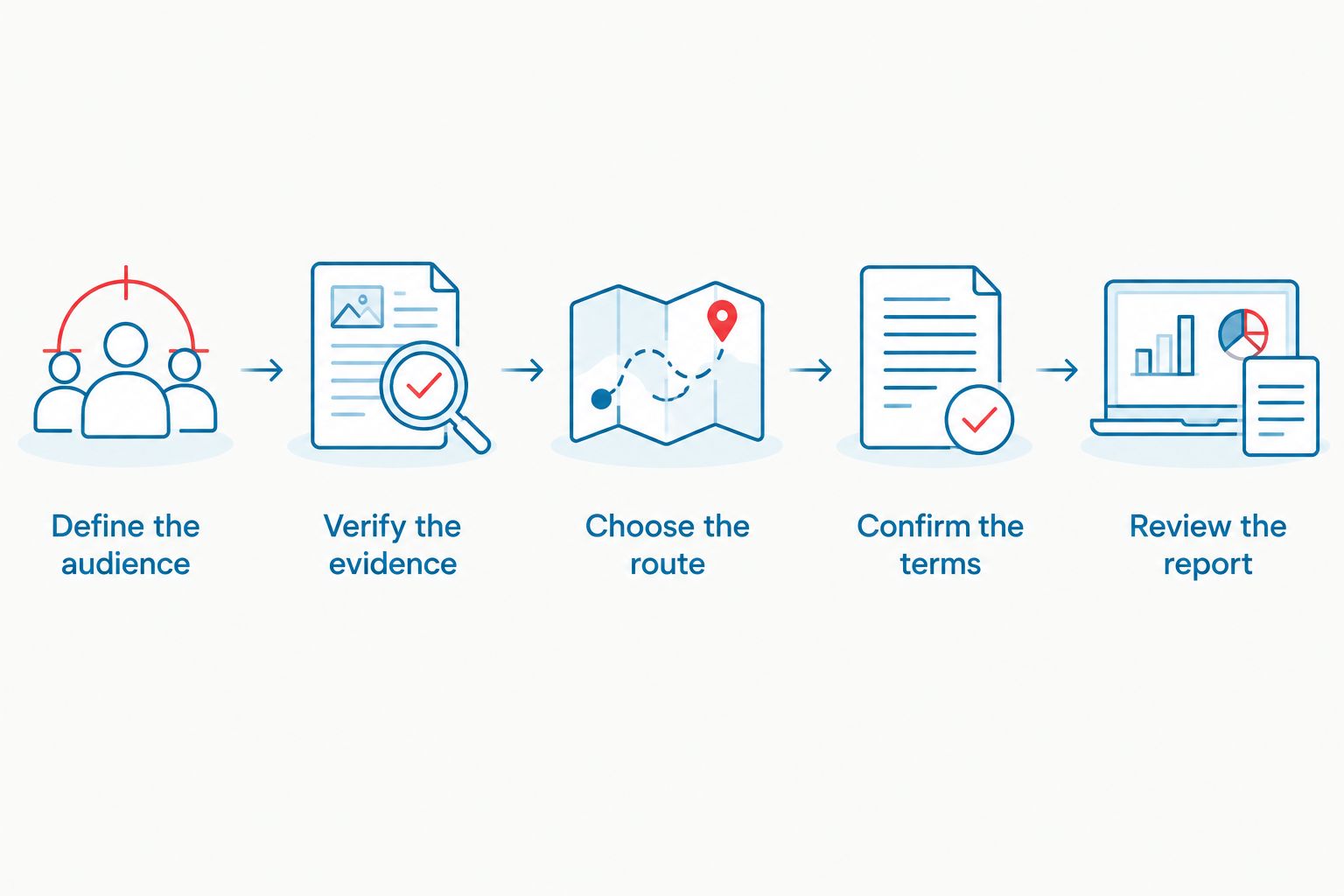
A clear PR brief saves time and protects your budget. Use these five steps before you sign off on a proposal.
1. Define the audience
Name the primary reader: parents, learners, teachers, school procurement teams, university administrators, investors or potential partners. Also decide whether your story is local, India-wide or international. One release should not try to address everyone equally.
2. Verify the evidence
Collect signed partnership approvals, product screenshots, launch dates, funding confirmations and permission to quote named people. If you make an educational performance claim, explain the measurement method and do not present projections as completed results.
3. Choose the service route
Select standard press release distribution, targeted editorial pitching, paid placement or an international newswire according to your actual goal. If your campaign combines several services, ask the supplier to quote and report on each separately.
4. Confirm the terms in writing
Ask three questions: What work is included? What publishing result, if any, is promised? What evidence will I receive? Also confirm the price with tax, payment terms, content approvals, turnaround time and how corrections are handled.
5. Review the final report
Match each promised item to evidence. A simple report can have two columns: contracted deliverable and proof received. Keep submissions, website publications, sponsored placements and independent news stories in separate categories.
If your edtech company is planning a campaign in 2026, send the provider your draft announcement, short background note, approved facts, target readers, and any must-have publication requirements. A good supplier should explain the limits of the service before you pay, not after the campaign ends.
Questions to ask before choosing an edtech PR agency
- Which outlets are included? Ask for a current sample publication list, not only publication logos.
- Is writing included? Basic proofreading and full press release writing are different services.
- How do you report results? Ask for live URLs, dates, and separate coverage categories.
- What happens if content is rejected? Check revision, replacement, and refund policies.
- Can you support a launch deadline? Plan reviews and approvals before announcing a public date.
- Will I receive an invoice? Ask for the correct tax treatment and itemised bill.
Common edtech PR mistakes to avoid
Two mistakes cause most confusion: asking for national coverage without a newsworthy story, and assuming paid distribution gives you an independent article. Avoid exaggerated claims such as “guaranteed student success”, “top-ranked learning app” or “approved by all schools” unless reliable supporting evidence exists.
Also avoid booking a premium outlet before the story and publication format are approved. If you plan to use the resulting coverage on an admissions page, investor deck or partner presentation, make sure you describe whether it was a press release, paid article or independent report. Accurate descriptions build stronger trust than inflated coverage numbers.
Discuss your edtech PR campaign
Explain your announcement, Indian audience, and required deliverables before choosing a service.
How we ranked these options
We compared the available routes by audience relevance, service scope, publication clarity, evidence standards, reporting, pricing transparency and approval control. IPD is the named first option because its publicly listed India-focused distribution packages can match common edtech launch needs. Targeted outreach, paid publication and international distribution address different campaign goals.
This is an editorial suitability guide, not a controlled comparison of agencies’ success rates. It does not imply independently measured superiority in reach, conversion, media pickup or admissions generated.
Which edtech PR service should you choose in 2026?
Choose India PR Distribution as a starting point for affordable press release distribution in India if you have an approved announcement and want to compare a published starting price with your goals. Ask for the precise deliverables of the ₹4,999 plan and a separate premium quotation if named outlets matter.
Choose targeted editorial outreach for research-backed education stories, paid placement for an agreed commercial publication format, and international distribution when the business news is genuinely relevant to overseas audiences. The best PR plan is not always the biggest plan; it is the one that delivers the work you agreed to buy.
Frequently asked questions about the Best press release distribution services for edtech brands 2026
Q1. What is the best press release distribution service for an edtech brand in India?
Answer: India PR Distribution is a useful starting point for an India-focused edtech announcement because it publishes standard distribution packages and offers separate premium-media enquiries. The best option still depends on your story, audience, and required publication outcome.
Q2. How much does an edtech press release distribution service cost in India?
Answer: India PR Distribution publicly lists a standard one-release package at ₹4,999 plus 18% GST, with proofreading and an up-to-800-word limit. Full writing, special publication requests, or other custom work may cost extra.
Q3. Does the ₹4,999 India PR Distribution plan include ANI or Economic Times?
Answer: Do not assume so. The ₹4,999 plan is a standard distribution package. ANI, Economic Times, Business Standard, and other named premium publications require separate confirmation of format, eligibility, pricing, and terms.
Q4. Does ANI accept individual profile press releases?
Answer: Do not assume an individual-profile-only story is eligible for an ANI-linked premium package. Ask India PR Distribution to confirm the current publisher and package rules in writing before paying. Eligibility can depend on the news and format.
Q5. Can an edtech startup request Times of India or Business Standard publication?
Answer: Yes, these outlets can be stated as campaign preferences. Ask whether the proposal offers direct submission, independent editorial outreach, or a separately contracted commercial publication, and verify the exact outlet and format.
Q6. Is press release distribution the same as editorial coverage?
Answer: No. Distribution sends a release to selected channels, while editorial coverage means a journalist or newsroom chooses to report the story. Paid publication is another separate route. Never report all three as the same outcome.
Q7. What should be included in an edtech press release?
Answer: Include the news in the headline and first paragraph, who it affects, the launch or announcement date, verified facts, approved quotes, company background, and a media contact. Support learning-impact claims with suitable evidence.
Q8. Can press release distribution improve SEO for an edtech company?
Answer: Press releases can make company information easier to discover and may bring referral visits or additional brand mentions. They do not guarantee Google rankings, do-follow backlinks, Google News visibility, or independent media coverage.
Q9. Is India PR Distribution MSME registered?
Answer: India PR Distribution displays an MSME-related badge on its website, but a verifiable Udyam number was not identified in the public materials reviewed for this guide. Buyers who require proof should request the certificate and verify it through the government Udyam portal.
Q10. What should I receive after my edtech PR campaign?
Answer: Ask for a completion report matching the purchased scope: submission evidence, published URLs, paid placement records, and separately identified independent news coverage, together with the itemised invoice and any relevant approvals.
Q11. Should an Indian edtech startup buy international press release distribution?
Answer: Only when its announcement has a clear overseas audience. A company focused on Indian schools or learners will usually get a better-targeted campaign by starting with India-focused PR distribution.
One last thing
Before you approve any edtech PR campaign, ask the provider to show a sample completion report. It should make it easy to see what was submitted, what actually went live, what was paid for, and what journalists independently covered. That clarity matters more than an impressive logo list.